The Unlikely World of Pakistani Yiddish Translators
Yiddish is a Germanic language that is spoken by Jews in the USA, Israel, Canada and Europe. According to recent estimates, Yiddish is spoken by about 500,000 people worldwide.
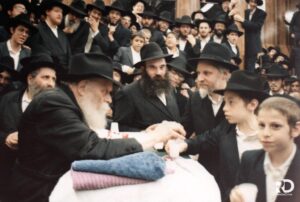
It is estimated that there are about a quarter million Yiddish speakers in the United States, about the same number in Israel, and another 100,000 or so in the rest of the world. That’s a lot less than the peak number of Yiddish speakers— 11,000,000— on the eve of the Holocaust. However, some scholars believe that the number of Yiddish speakers is no longer declining and may in fact be on the rise (Rutgers Department of Jewish Studies).
UNESCO classifies Yiddish as a “definitely endangered” language, meaning that children no longer learn it as their mother tongue in many communities. Once spoken by millions of Ashkenazi Jews across Central and Eastern Europe—from Alsace to western Russia—Yiddish experienced a dramatic decline following the Holocaust, widespread assimilation, and the shift to national languages such as English and Hebrew. Today, however, Yiddish remains the native language of many Hasidic communities and continues to evolve, even as it remains endangered in much of the broader Jewish world.
A Recent and Surprising Discovery
In May 2026, GTS translated safety and operation instructions for rechargeable battery systems into over 10 languages, one of them being Yiddish. While sourcing the Yiddish component of the project, we were amazed to find that there are Yiddish translators in Pakistan, a country with no Jews and no Yiddish speakers.
We assigned some of the work to a Pakistani Yiddish translator. And while we ended up using a different version (done by a professional translator based in Canada), we were surprised to find the Pakistani version to be quite good and idiomatic.
Considering the cultural and linguistic background, it comes as a complete surprise that there are professional Yiddish translators based in Pakistan. Pakistan is officially an Islamic republic, and its constitution declares Islam to be the state religion (U.S. Department of State, Bureau of Democracy, Human Rights, and Labor. (2004). “Pakistan: International Religious Freedom Report 2004.” Distributed by U.S. Department of State Archive.). This is probably one of the last places where you would expect to find professional Yiddish translators.
Commercial Demand for Professional Yiddish Translation Services
The demand for professional English to Yiddish translation services is very limited. For example, the big tech companies like Microsoft, Google and Facebook do not fully localize their core user interfaces or operating systems to Yiddish. So it goes without saying that mid-size and small companies, who have much smaller budgets, don’t localize their products to Yiddish either.
There is a limited commercial demand for professional Yiddish translation. Some examples are: political campaigns, government communications, food safety and nutrition information, medical consent and websites. Certain Yiddish documents may need to be translated to English for financial purposes, litigation, marital issues and immigration.
With such limited demand for Yiddish translation services, finding good translators can be a challenge. Especially when you consider that Yiddish is not a homogenous language: the Yiddish spoken in New York may differ from the Yiddish spoken in Jerusalem or in Canada. LSP project managers need to determine which language variant and style are needed on a case by case basis.
Considering all of this, it raises questions of how a translator in Pakistan can master the intricacies of the Yiddish language.
Why Are There Yiddish Translators Based in Pakistan?
Pakistan has developed a substantial freelance and outsourcing sector over the last two decades. Many translators there work remotely for agencies and clients worldwide. Because competition is intense in major language pairs, some translators pursue highly specialized niches.
According to Pakistani Yiddish translator Kanwal SK:
Many translators choose to specialize in less common language pairs because international demand often extends beyond major world languages. Remote work and access to digital learning resources have made such specializations more accessible.
In many cases, translators working with rare languages rely heavily on self-study, terminology research, practical projects, and collaboration with international colleagues rather than formal university programs.
The Technical Challenges of Yiddish Translation
Technical translation and software localization work in Yiddish presents unique challenges. Unlike larger languages, Yiddish does not always have standardized modern terminology for software, engineering, or financial concepts.
This forces translators to balance clarity, consistency, and readability carefully.
Some of the challenges include:
- right-to-left formatting issues;
- mixed Hebrew and Yiddish terminology;
- inconsistent spelling conventions;
- OCR problems with older Hebrew-script documents;
- limited terminology databases;
- adapting modern technical concepts into readable Yiddish.
Technical translation requires accuracy and consistency. Some modern technical concepts may not have widely recognized equivalents in Yiddish. Translators must carefully research terminology and ensure that the final text is both accurate and understandable.
MT and AI are highly unreliable for Yiddish translation
Interview with Kanwal SK, a Professional Yiddish Translator in Pakistan
How did you first become interested in Yiddish and Hebrew?
My interest in Yiddish and Hebrew developed through my work as a translator. I was initially exposed to these languages through professional projects and became fascinated by their history, writing systems, and cultural significance. As I gained more experience, I continued learning through research, practical translation work, and collaboration with experienced colleagues.
What led you to pursue a professional career in Yiddish translation?
I have always enjoyed working with specialized language pairs. Yiddish is a unique language with a rich cultural heritage, and I found the work both intellectually rewarding and professionally interesting. Over the years, I have gained experience handling Yiddish translation projects for international clients and language service providers.
How common is Yiddish language study in your country or region?
Yiddish is not commonly studied in Pakistan. Most language professionals who work with Yiddish acquire their knowledge through independent study, professional practice, and access to online resources rather than through formal academic programs.
There appear to be several Yiddish translators working from Pakistan. Why do you think this niche exists there?
Pakistan has a strong freelance and translation community that serves clients worldwide. Many translators choose to specialize in less common language pairs because international demand often extends beyond major world languages. Remote work and access to digital learning resources have made such specializations more accessible.
What kinds of Yiddish translation projects do you typically work on?
My projects have included website content, software localization, surveys, educational materials, business documents, user-interface strings, and general translation assignments. The variety of projects helps me continuously develop my expertise in the language.
What are the biggest challenges in translating technical content into Yiddish?
Technical translation requires accuracy and consistency. One challenge is that some modern technical concepts may not have widely recognized equivalents in Yiddish. Translators must carefully research terminology and ensure that the final text is both accurate and understandable for the target audience.
How different are Yiddish and Hebrew from a translator’s perspective?
Although both languages use Hebrew script and share certain historical connections, they are quite different linguistically. Hebrew has undergone extensive modernization and standardization, while Yiddish follows its own grammatical and vocabulary traditions. Each language requires a distinct translation approach.
Are there standardized technical terms in Yiddish, or do translators often need to adapt terminology creatively?
There are standardized terms for many concepts, but translators sometimes encounter newer or highly specialized terminology. In such cases, careful adaptation and terminology research are necessary to maintain clarity and consistency.
What types of clients usually request Yiddish translations today?
Clients include localization agencies, educational organizations, technology companies, publishers, researchers, and cultural institutions. Many projects are connected to digital content, software, education, or community outreach.
There are virtually no opportunities to study Yiddish formally in Pakistan. How did you actually become proficient enough to translate it professionally?
My proficiency developed gradually through a combination of independent study and practical translation work. As a freelance translator, I had access to multilingual projects that required extensive terminology research. Over time, I became familiar with Yiddish grammar, vocabulary, and writing conventions by working with authentic texts, consulting reference materials, and continuously refining my understanding through real translation assignments.
What resources did you use (books, online courses, dictionaries, native speakers, etc.), and roughly how long did it take before you felt confident accepting professional assignments?
I relied primarily on dictionaries, digital language resources, linguistic references, client glossaries, and parallel texts. Online materials and terminology databases were particularly valuable. Building confidence was a gradual process over several years of continuous learning and practical experience, rather than reaching a single milestone.
Can you speak Yiddish conversationally, or is your expertise primarily in reading and translating written texts?
My expertise is primarily in reading, understanding, and translating written Yiddish. My professional work focuses on producing accurate written translations rather than conversational interpretation.
Have you ever interacted with native Yiddish speakers or visited a Yiddish-speaking community?
I have not visited a Yiddish-speaking community. Most of my professional experience has been through international translation projects and collaboration in a remote working environment.
If not, how do you ensure that your translations sound natural and authentic for native readers?
I rely on established dictionaries, reference materials, style guides, parallel texts, and client terminology. I also compare usage across reliable Yiddish publications and continuously refine terminology to ensure that translations are accurate, natural, and appropriate for the intended audience.
How did you decide on the final terminology?
I compare multiple reliable references, review client terminology preferences, and evaluate how similar concepts are translated in existing Yiddish publications. Consistency throughout the document is just as important as selecting the appropriate individual term.
When clients discover that you are a professional Yiddish translator based in Pakistan, are they usually surprised?
Yes, many clients are initially surprised because Yiddish is not commonly associated with Pakistan. Once they see the quality of the work, however, the focus quickly shifts from my location to the accuracy and professionalism of the translation.
Have you received any memorable reactions from clients?
One memorable experience has been clients expressing genuine curiosity about how I entered such a specialized field. Those conversations have often led to interesting discussions about language learning, cultural exchange, and the increasingly global nature of the translation industry.
What aspect of Yiddish or its culture surprised or fascinated you the most as you learned the language?
One aspect that fascinated me is how Yiddish preserves centuries of cultural history while continuing to serve modern communities. I also appreciate the way it combines influences from several linguistic traditions, making it both historically rich and linguistically distinctive.
What do you think is the biggest misconception people have about Yiddish or about professional Yiddish translation?
A common misconception is that Yiddish is simply another form of Hebrew. Although the two languages share the Hebrew script and historical connections, they are distinct languages with different grammar, vocabulary, and linguistic development. Another misconception is that translating a niche language is easier because there is less competition. In reality, rare-language translation often requires extensive research, terminology management, and careful attention to cultural and linguistic nuance.
Have you noticed growing or declining demand for Yiddish translation services in recent years?
Yiddish remains a niche language, but demand has remained relatively stable in the areas where I work. Digital platforms, localization projects, and cultural preservation efforts continue to create opportunities for Yiddish translation.
What advice would you give to someone interested in learning or working with rare languages professionally?
Be patient and commit to continuous learning. Developing expertise in a rare language requires strong research skills, cultural understanding, and practical experience. Building a professional network and working consistently on real projects can be just as important as formal study.